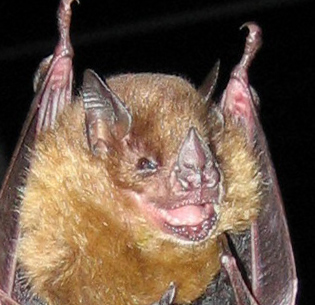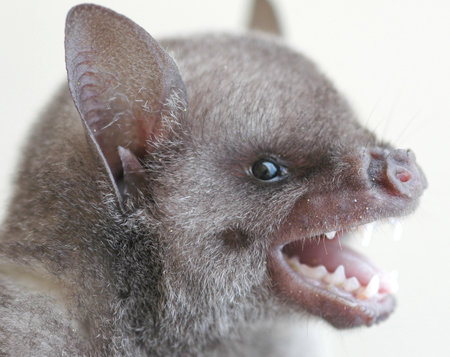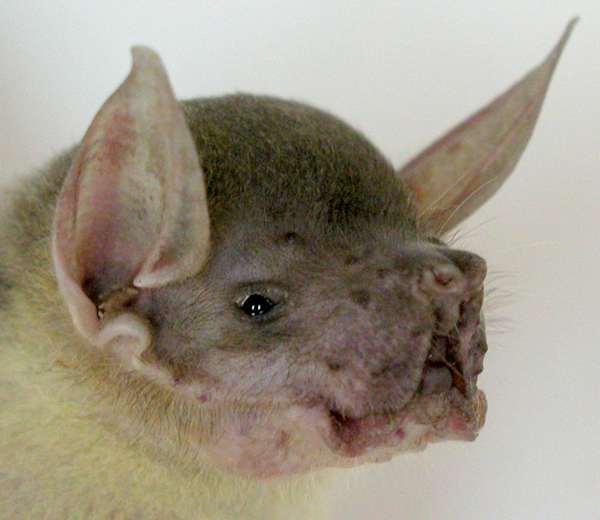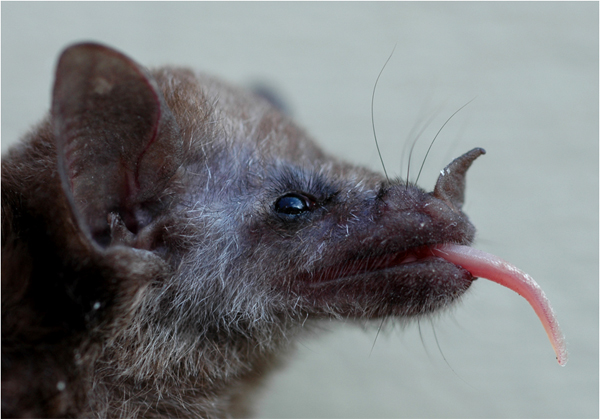
Bat research in the Lesser Antilles
Please be patient while this page loads
Updated December 2018
OUR TEAM has been studying the biodiversity and biogeography of bats througout
the Lesser Antilles. Our team has focused on nearly 20 islands in this archipelago,
with the greatest amount of effort being invested in the island of Montserrat. Below
you will find a short entry for many of these islands as well as a list of our publications
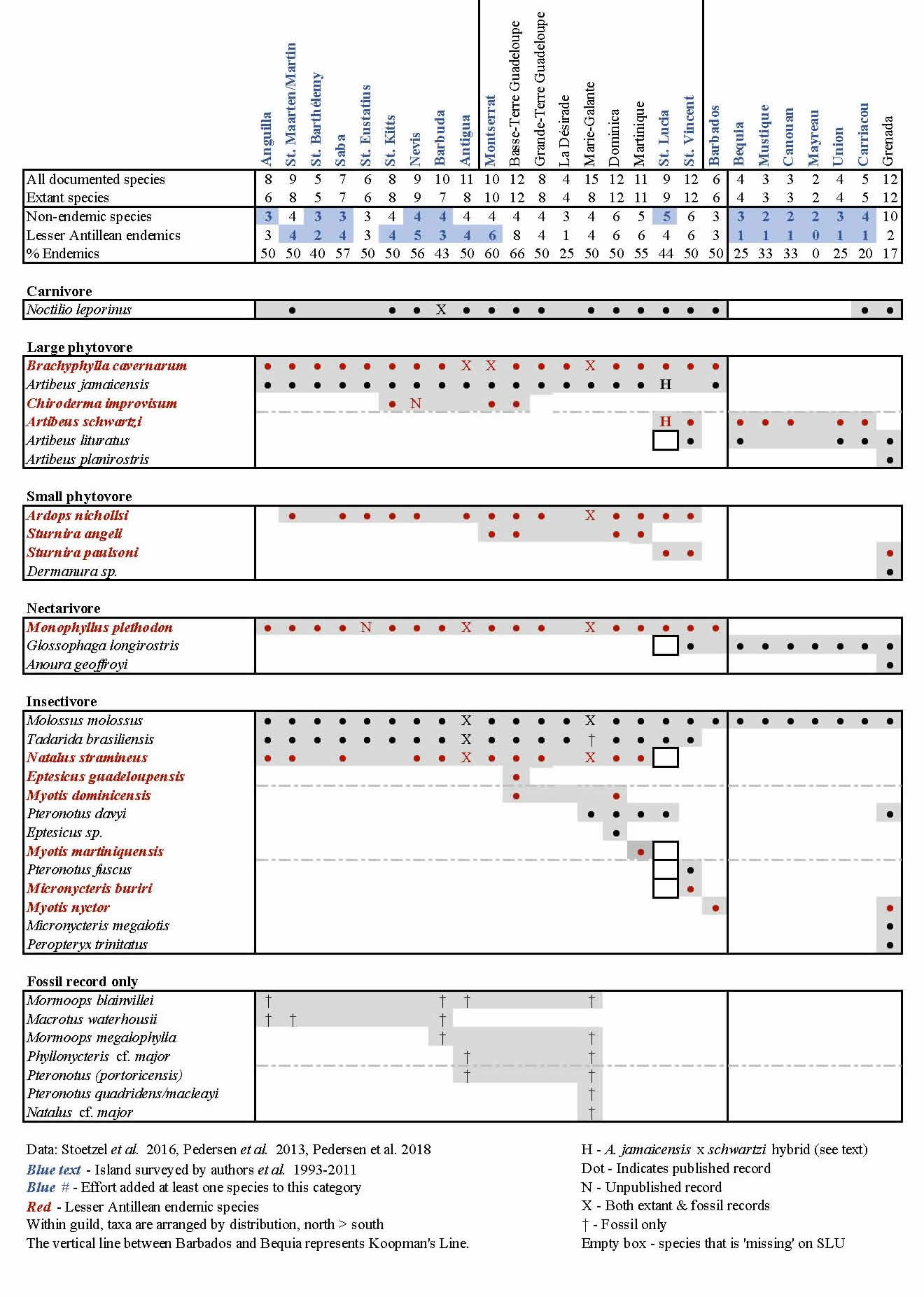
that were spawned by those efforts. Above is a species-island grid that summarizes
bat survey efforts up through 2018.
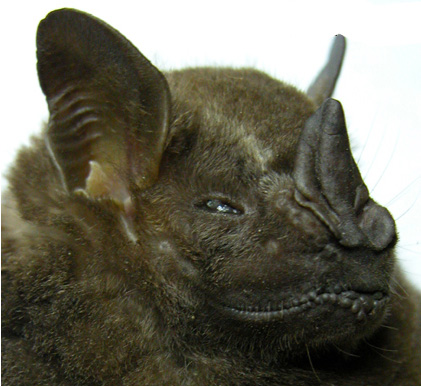
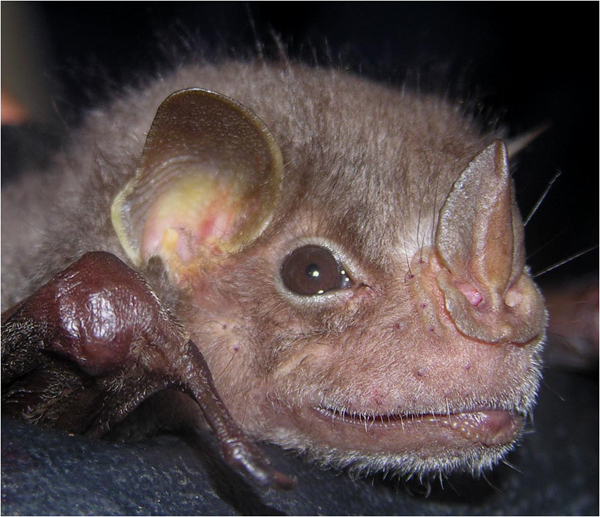
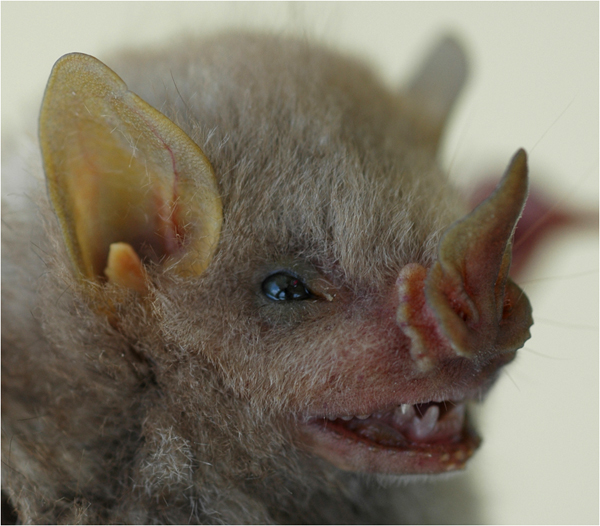
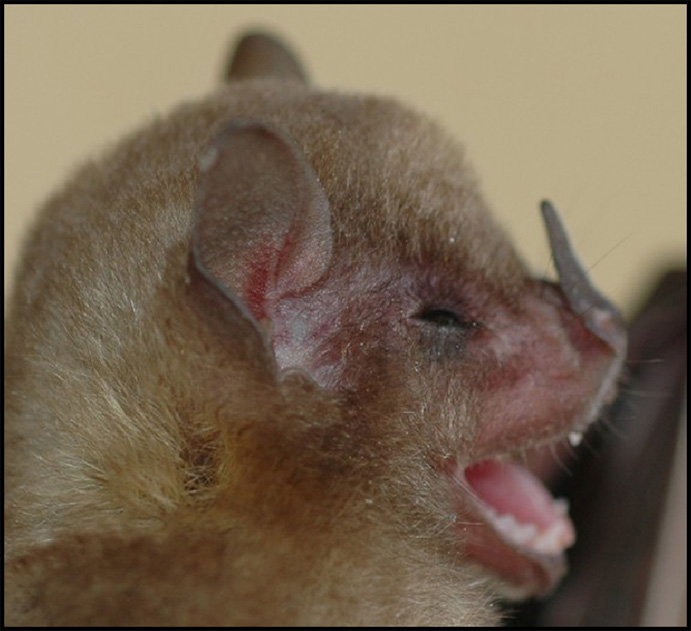
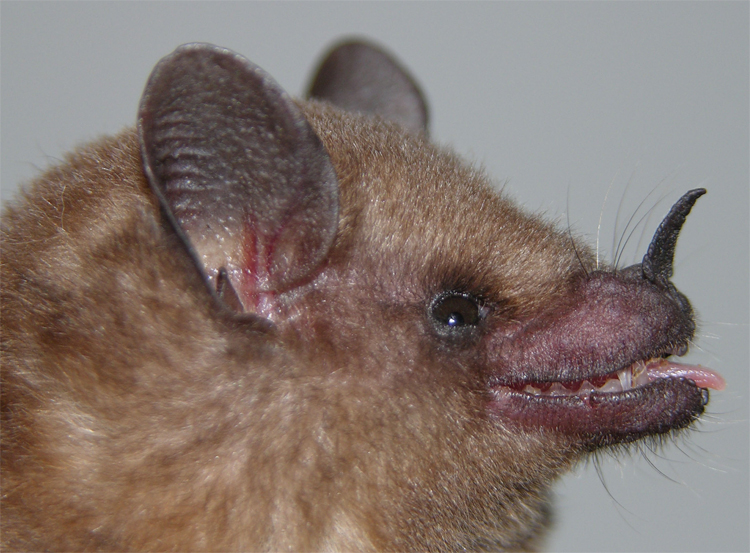
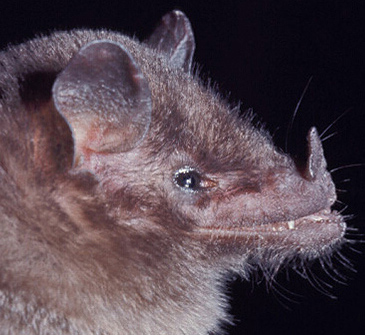
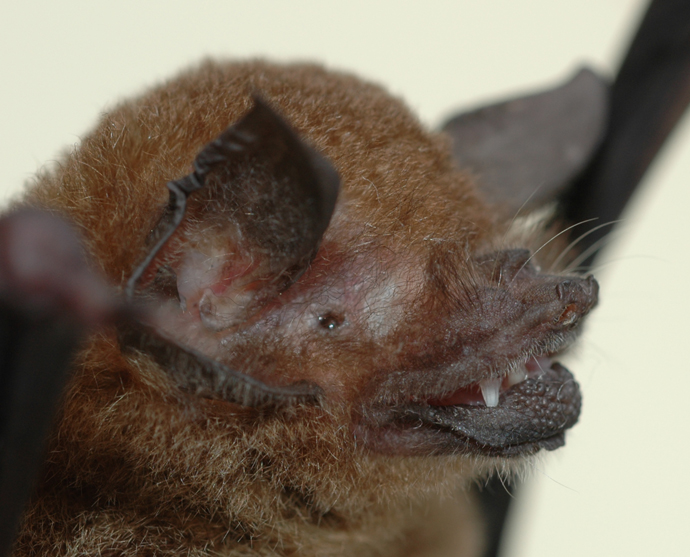
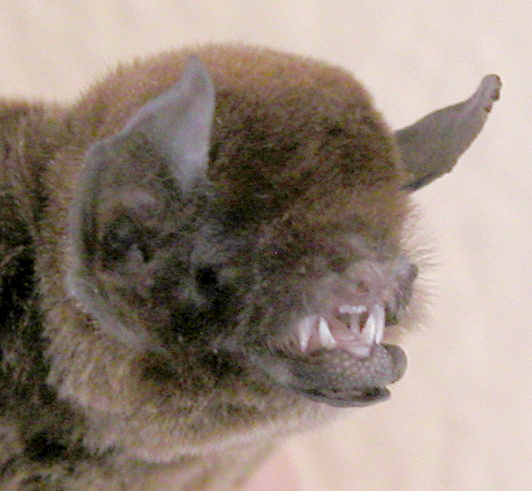
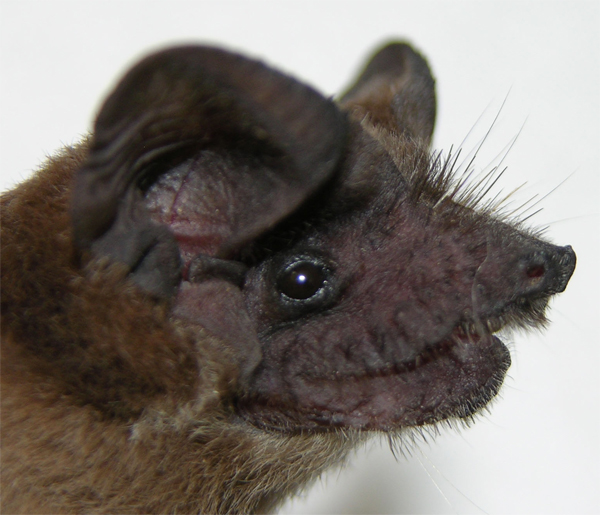
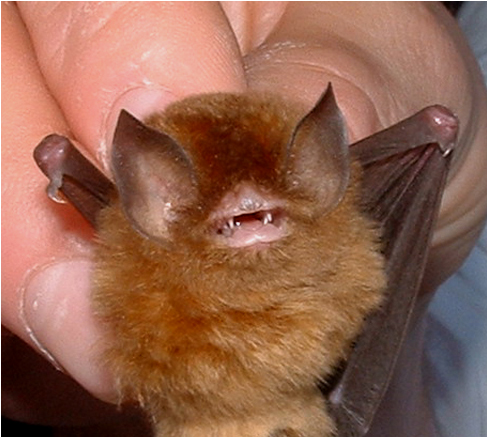
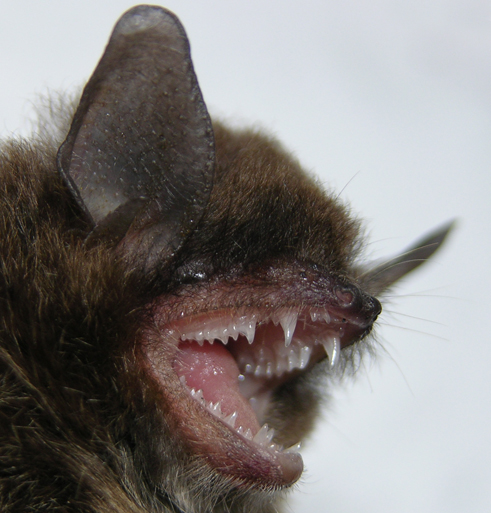
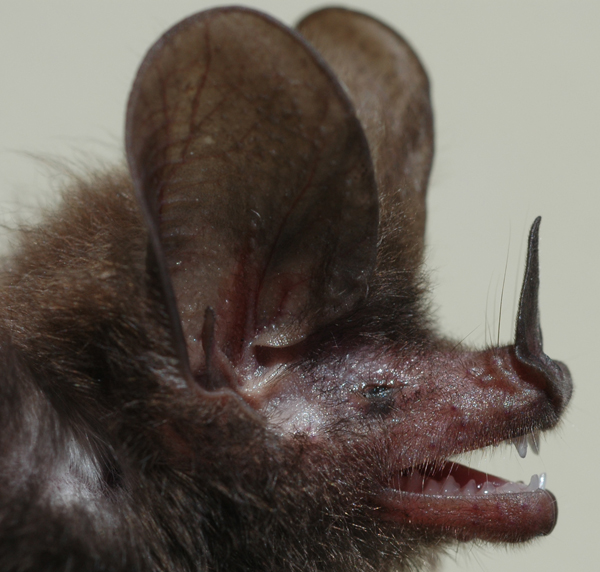
Bat fauna of the Lesser Antilles
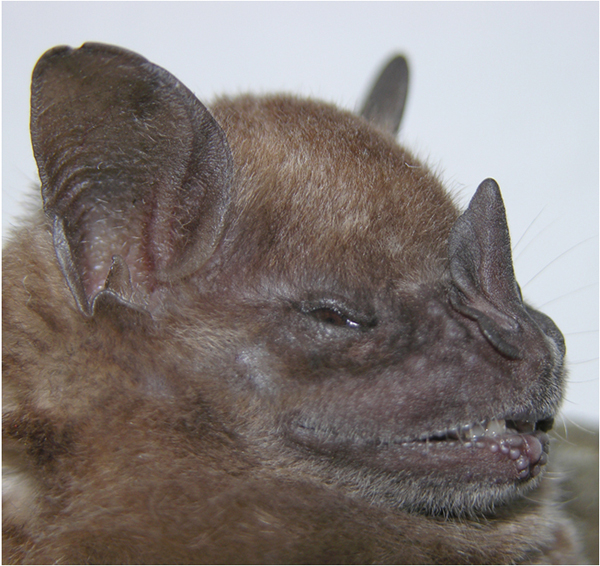
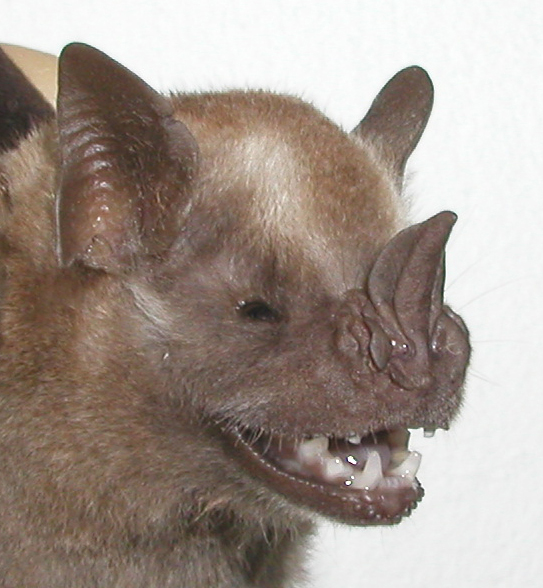
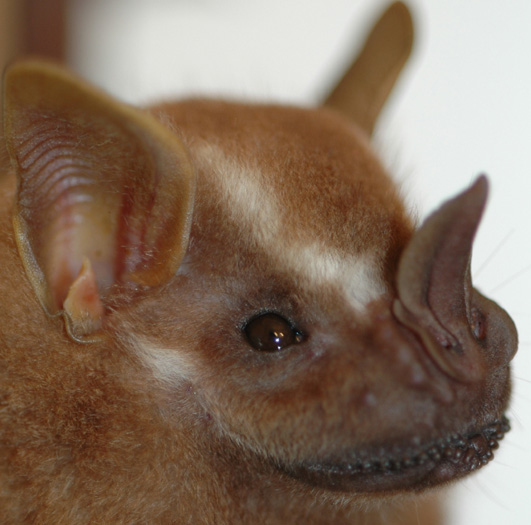
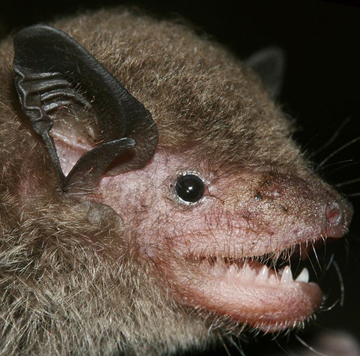
Artibeus jamaicensis
Artibeus schwartzi
Artibeus lituratus
Artibeus planirostris
Chiroderma improvisum
c/o Beatrice Ibéné
Ardops nichollsi
Sturnira lilium
Sturnira angeli
Brachyphylla cavernarum
Noctilio leporinus
Monophyllus plethodon
Glossophaga longirostris
Anoura geoffroyi
Pteronotus rubiginosus
Pteronotus davyi
Molossus molossus
Tadarida brasiliensis
Natalus stramineus
Myotis nyctor
Micronycteris buriri
Eptesicus guadeloupensisPhotos:
Hartpence, Kwiecinski, Larsen, Pedersen, Morton,
Issartel, M. Breuil, A. Breuil, Ibene, Questel, Medellin;Flickr.com/photos/ 30857996@N08/3343231838/;
Https://www.faune-guadeloupe.com/album-229158.html;
Guadeloupe-fr.com/fauneFloreAntilles/voirimage=PLB_000259/;
Nouragues.cnrs.fr/species_lists/bat_web/thumb.html;
Online Field Guide most of the Bats Shown Above
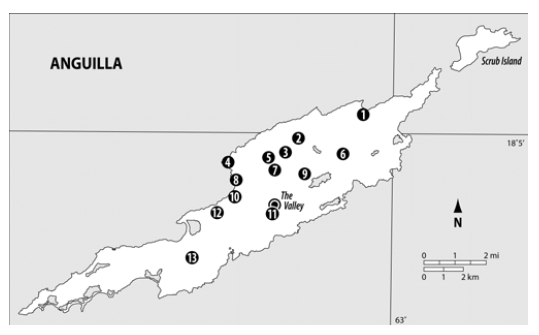
ANG-Anguilla
Comment: In addition to providing morphometric and natural history information for the five species of bats previously known from the island, records of a species of bat new to the fauna of the island of Anguilla—Tadarida brasiliensis—are documented. Based on data from this study, the conclusion is drawn that the Anegada Passage has had only a limited impact as a zoogeographic barrier for the chiropteran faunas of the Greater and Lesser Antilles.
Species (6):
Monophyllus plethodon, Brachyphylla cavernarum, Artibeus jamaicensis,
Natalus stramineus, and Molossus molossus, Tadarida brasiliensis.Publication: Bats of Anguilla (2007)
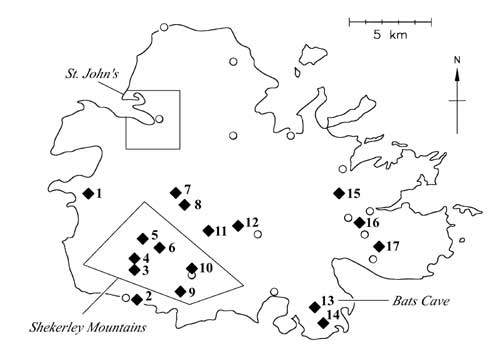
ANU-Antigua
Comment: Antigua is situated at the northern end of what Genoways termed the Lesser Antillean Faunal Core. Fruit bat captures per net-night (BNN) range from 6.65-2.59 in the neotropics, and phyllostomid captures on ANU are on the very low end of this scale at 1.92 BNN. Antigua does not have the elevation or heavily forested valleys that might support additional species of fruit bats as they do on the adjacent islands.
Species (8):
Noctilio leporinus, Monophyllus plethodon, Artibeus jamaicensis, Brachyphylla cavernarum,
Natalus stramineus, Tadarida brasiliensis, Molossus molossus, Ardops nichollsiPublications:
1) Bats of Antigua (2006)
2) First Record of Ardops from Antigua (2009)
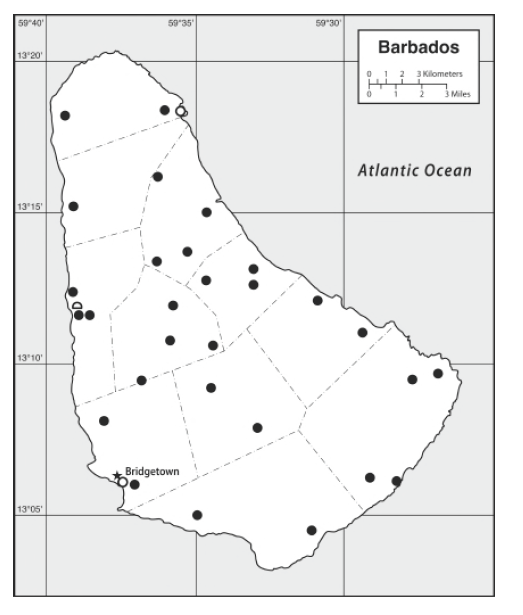
BGI-Barbados
Comment: The Barbadian chiropteran fauna of 6 species is much smaller than those on the four neighboring Lesser Antillean islands to the west and north. We believe that this is primarily the result of two factors—geological age and geographic isolation. Our work indicates that populations of the 6 species of bats on Barbados are in good condition in all cases, but only for Artibeus jamaicensis and Molossus molossus are the populations large enough to not be of ongoing concern. The maintenance of the chiropteran fauna can best be served by three management actions — preservation of caves and associated gullies, forests, and hydrological systems.
Species (6):
Noctilio leporinus, Monophyllus plethodon, Brachyphylla cavernarum,
Molossus molossus, Myotis nyctor, Artibeus jamaicensisPublication: Bats of Barbados (2012)
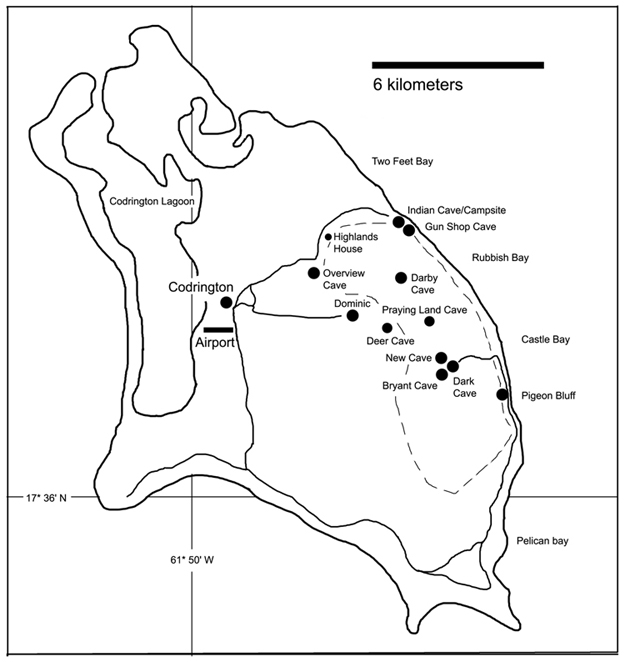
BBQ-Barbuda
Comment: Although the ecological diversity of Barbuda is limited, this bat fauna matches those of islands in the region such as Antigua, Nevis, and St. Kitts. It is proposed that this biodiversity of bats is maintained because of the geology of Barbuda provides ample roosting sites and access to freshwater in caves, bluff faces, and sinkholes. The conservation of the chiropteran fauna of Barbuda, therefore, depends on the protection of these geological resources.
Species (7):
Noctilio leporinus, Monophyllus plethodon, Artibeus jamaicensis, Brachyphylla cavernarum,
Natalus stramineus, Tadarida brasiliensis, Molossus molossusPublication: Bats of Barbuda (2007)
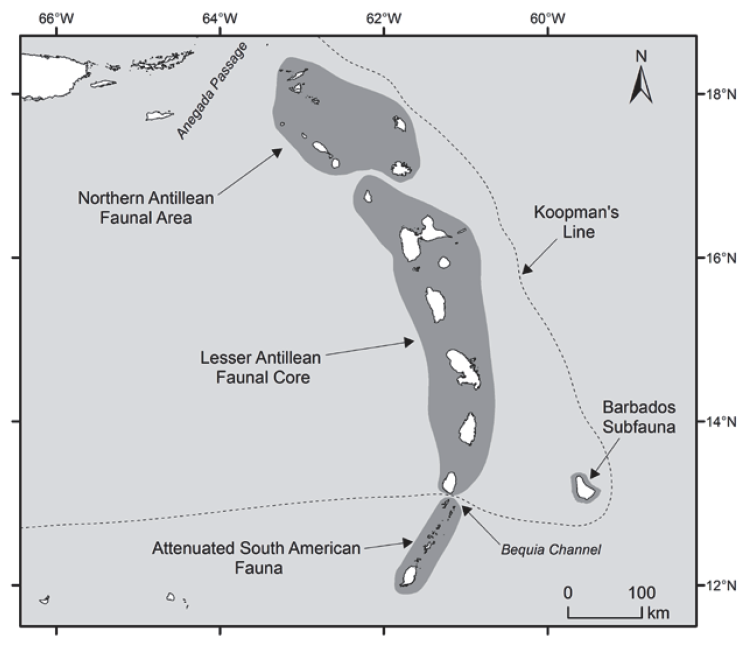
Grenadines
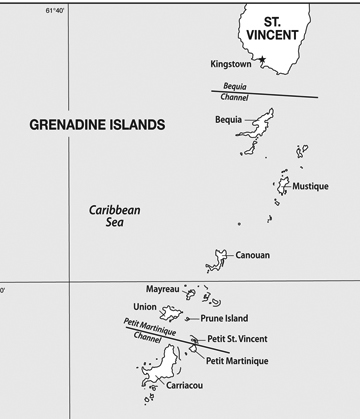
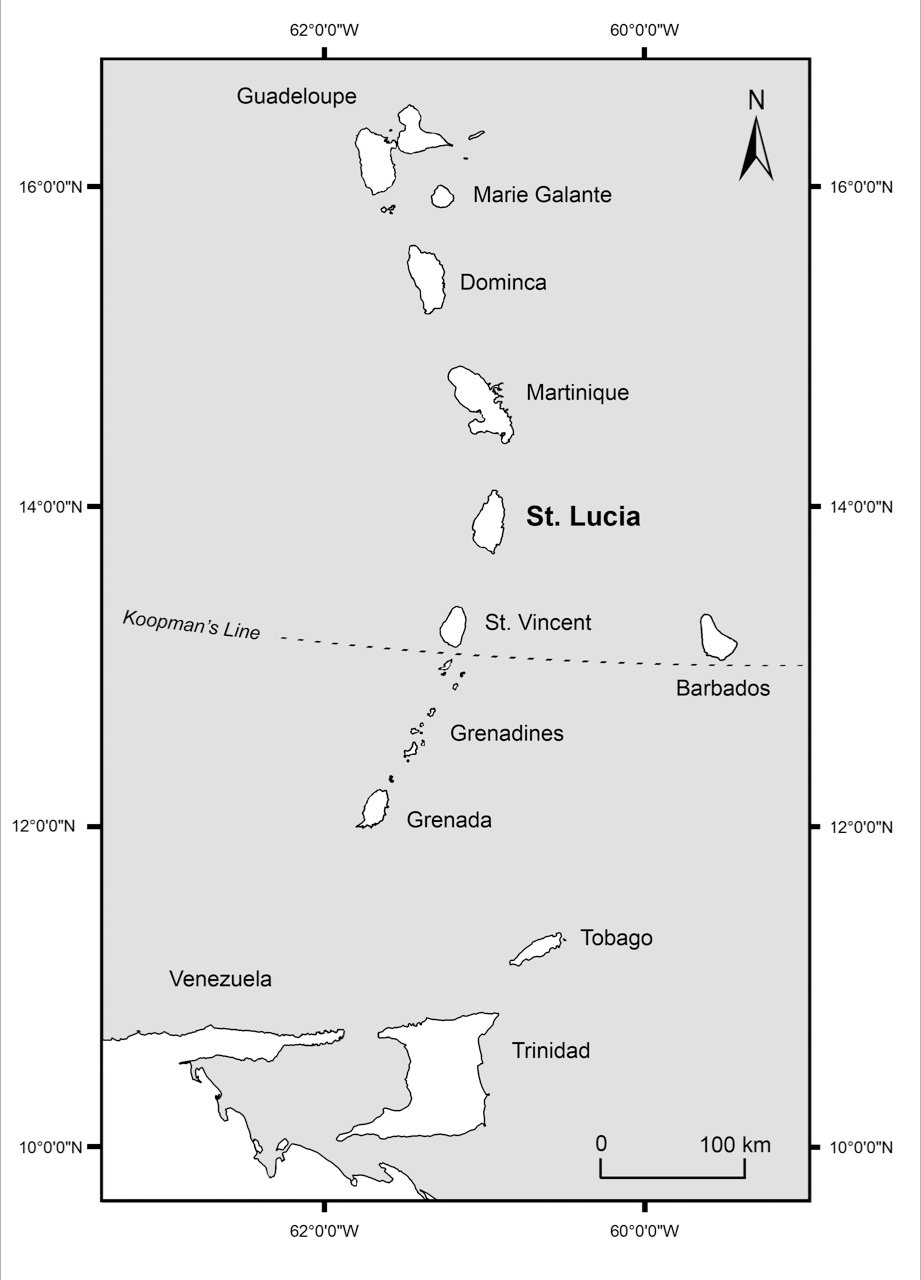
Comment: The Grenadines, being situated between St. Vincent and Grenada, occupy an important zoogeographic position. None of the 12 species of bats occurring on Grenada are Antillean endemics, whereas on St. Vincent, to the north of the Grenadines, 3 of the 12 species are Antillean endemics. The boundary of the West Indian Subregion of the Neotropical Region based on the distribution of mammals has been designated as Koopman’s Line. One of the areas where placement of Koopman’s Line was unresolved was among the Grenadine Islands because the chiropteran fauna of this area was essentially unknown. Based on data reported herein, we place Koopman’s Line along the 14-km wide Bequia Channel that separates St. Vincent and the northern-most Grenadine island of Bequia.
Species (5):
N. leporinus, G. longirostris, A. lituratus, A. schwartzi, M. molossusPublications:
1) Bats of the Grenadines (2010)
2) Taxonomy of Artibeus in the Caribbean (2007)
3) Hybridization in Caribbean Artibeus (2010)
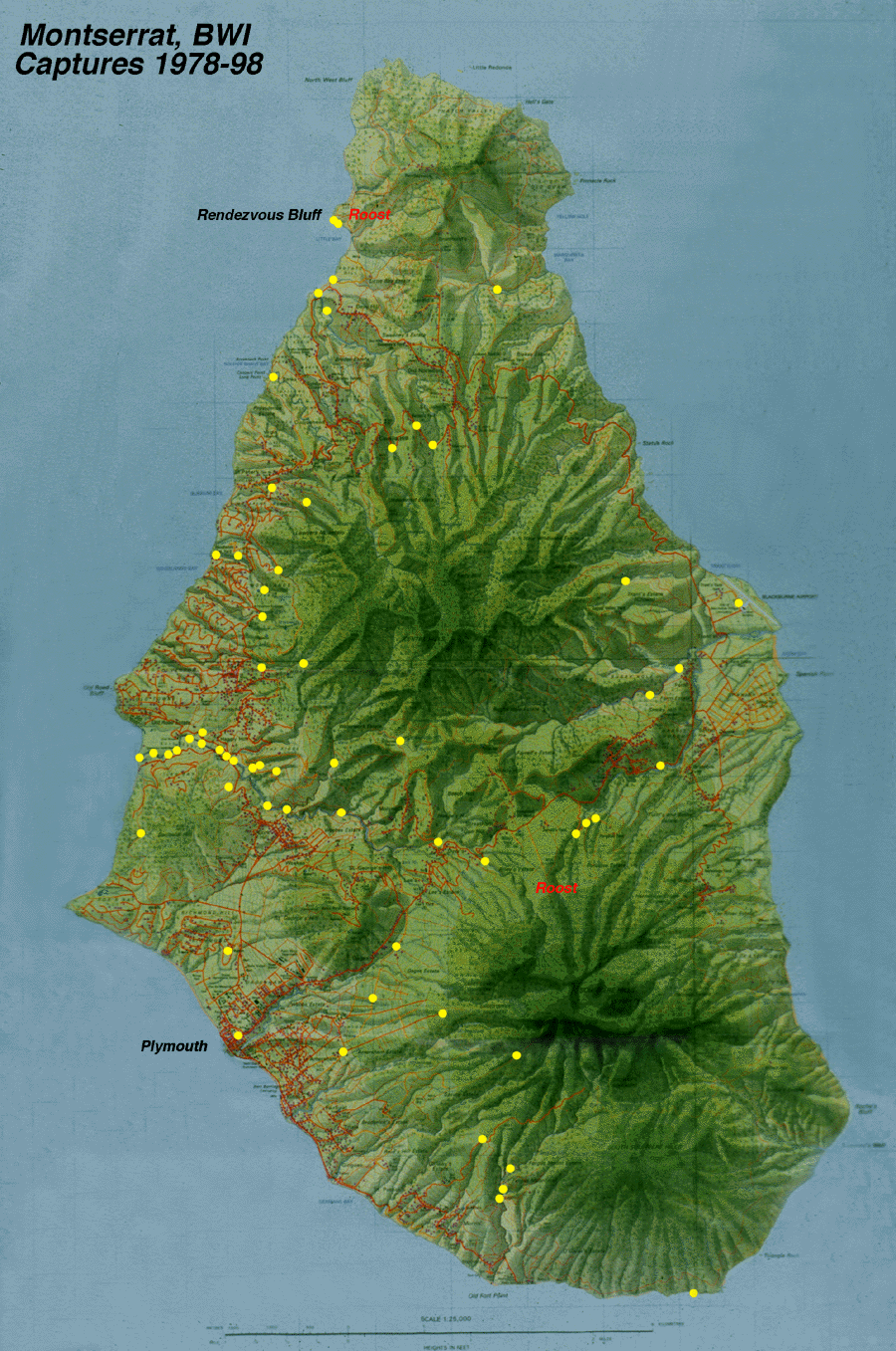
MNI-Montserrat
Main MNI page hereComment: The first report of bats on Montserrat came from O. Thomas of the British Museum in 1894. The first voucher (N. stramineus ) was collected by S. Danforth in 1937 from an unknown location on the island. Since that time, several surveys have produced a database including over 3400 captures of ten species of bats from 100+ locations. Montserrat provides a dynamic setting for understanding the effects of natural disasters (Hurricane Hugo 1989, Volcano 1995+) on animal populations and how they respond to such events.
Species (10):
N. leporinus, M. plethodon, S. thomasi, C. improvisum, A. jamaicensis,
A. nichollsi, B. cavernarum, N. stramineus, T. brasiliensis, M. molossusPublications:
[Sub-lethal pathology in bats associated with volcanic ash: J. Mammalogy, 2012]
[Population fluctuation in the bats on Montserrat: 2009]
[Durrell Conservation Monograph 1. Bats of Montserrat Pp 130-138: 2008]
[Population genetics in 3 species of bat: Molecular Ecology - 2004]
[Earth, wind, and fire, the bats of Montserrat: Natural History - 2003]
[Notes on the bats on Montserrat: Carib. J. Sci. - 1996]
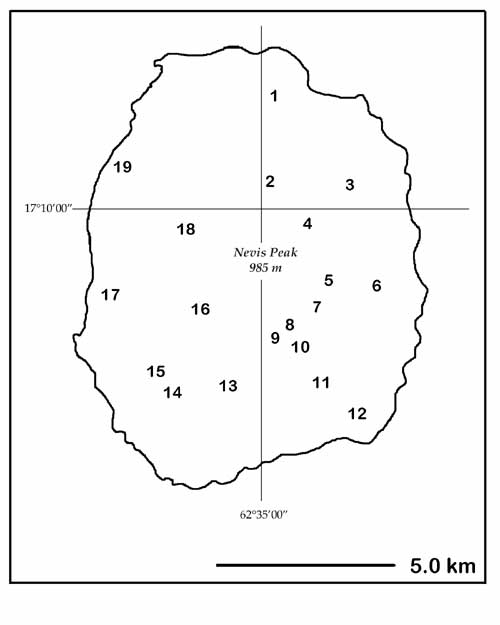
NEV-Nevis
Comment: Only one species of bat, Molossus molossus, previously has been documented as occurring on the northern Lesser Antillean island of Nevis. Field research and reviews of existing museum collections have provided documentation based on voucher specimens for an additional seven species occurring on the island: Noctilio leporinus, Brachyphylla cavernarum, Monophyllus plethodon, Ardops nichollsi, Artibeus jamaicensis, Natalus stramineus, and Tadarida brasiliensis. The biological diversity of the chiropteran fauna on Nevis is similar to that found on other islands in the northern Lesser Antilles.
Species (9):
Noctilio leporinus, Monophyllus plethodon, Artibeus jamaicensis, Ardops nichollsi,
Brachyphylla cavernarum, Natalus stramineus, Tadarida brasiliensis, Molossus molossus
*Chiroderma improvisum was captured in 2017 (Burton Lim, unpublished data)Publication: Bats of Nevis (2003)
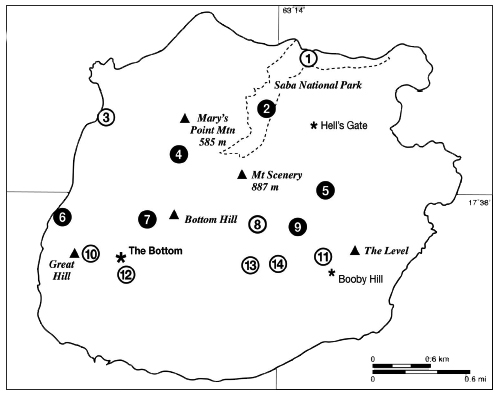
SAB-Saba
Comment: Given it's size, Saba has a remarkable bat fauna on par with islands much greater in size. This relationship is best explained by a propensity for over water dispersal by West Indian bats. Given the small size of Saba (12 km2), conservation concerns are expressed for the future of the fauna and some recommendations are made for its preservation.
Species (7):
Monophyllus plethodon, Artibeus jamaicensis, Ardops nichollsi, Brachyphylla cavernarum,
Natalus stramineus, Tadarida brasiliensis, Molossus molossusPublication: Bats of Saba (2007)
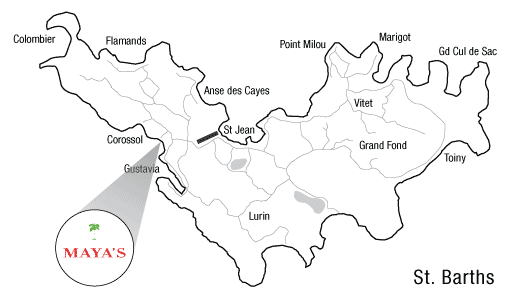
SBH-St. Barts
Comment: Based on experience on other Antillean islands, we believe that caves are extremely important for maintaining healthy bat populations. Saint Barthelemy does have a number of important caves that can be used as roosts by four of the five species on the island (M. molossus is the exception). It will be important as development of the island proceeds to protect these cave systems.
Species (5):
Monophyllus plethodon, Brachyphylla cavernarum, Artibeus jamaicensis,
Molossus molossus, and Tadarida brasiliensis.Publication: Bats of St. Barts (2007)
See website by Karl Questel HERE
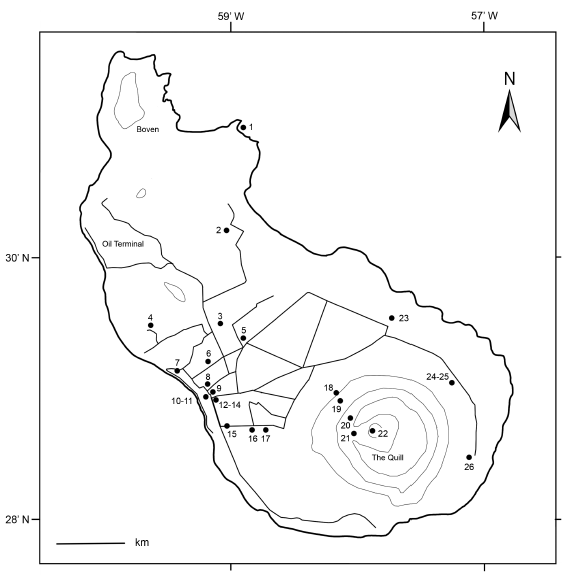
EUX-ST. Eustatius/Statia
Comment: The bat fauna of the Caribbean island of Sint Eustatius consists of five documented species— Monophyllus plethodon, Brachyphylla cavernarum, Artibeus jamaicensis, Ardops nichollsi, and Molossus molossus—and one provisional species—Tadarida brasiliensis. The Insular Single-leaf Bat, M. plethodon, is reported in the scientific literature for the first time from Sint Eustatius based on material presented herein. The bat fauna of the island is considered to be unbalanced because only three species, which are the environmental generalists, are abundant, whereas the more specialized species are rare or absent from the fauna. It is our hypothesis that the unbalanced bat fauna on St. Eustatius is the result of chronic environmental degradation and destruction due primarily to human activity
Species (6):
Artibeus jamaicensis, Ardops nichollsi, Brachyphylla cavernarum,
Molossus molossus, Monophyllus plethodon, Tadarida brasiliensis.Publication: Bats of St. Eustatius (2018) [Big file]
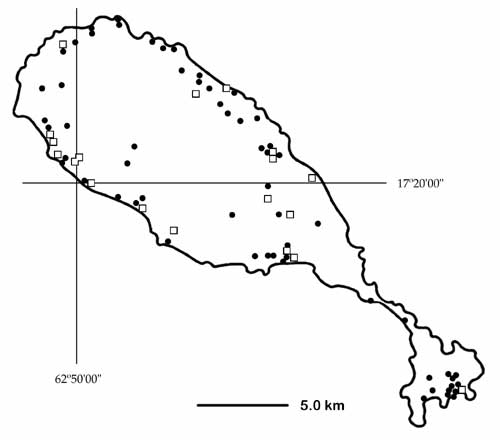
SKB-St. Kitts
Comment: We discuss the difficulty in accurately reporting mistnetting effort and capture rates. The average rate of fruit bat captures during 2001 on St. Kitts (1.11 bats per net-night - BNN) falls towards the lower end of the range (0.65-2.47 BNN) reported from nearby islands in the northern Lesser Antilles and the lower end of the range (2.20-5.93 BNN) reported for mainland populations of neotropical fruit bats. We discuss possible causes of these decreased population levels, such as the impact of recent hurricanes and competition from the large population of vervet monkeys (Cercopithecus sabaeus) found on St. Kitts.
Species (8):
N. leporinus, M. plethodon, A. jamaicensis, A. nichollsi,
B. cavernarum, M. molossus, and T. brasiliensis, Chiroderma improvisumPublications:
1) Bats of St. Kitts (2005)
2) Beck et al., 2016. First Record of Chiroderma on SKB (doi: https://dx.doi.org/10.15560/12.2.1854)
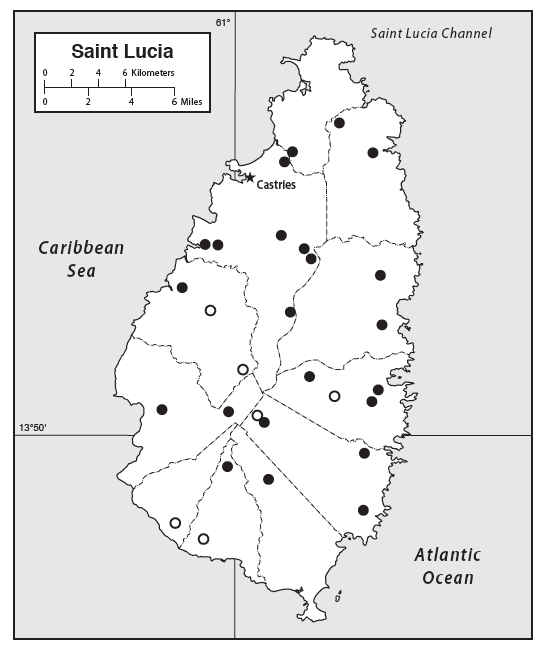
SLU-St. Lucia
Comment: Based on its geographic location, the bat fauna of St. Lucia is enigmatic in regard to species dispersal along the Lesser Antillean archipelago. Natalus stramineus and M. martiniquensis are present on Martinique immediately to the north, and M. buriri, P. fuscus, Glossophaga longirostris, and Artibeus lituratus are found on St. Vincent directly to the south, yet these six species are conspicuously absent on St. Lucia. Moreover, the St. Lucian population of Artibeus resides at the northern edge of a fascinating hybrid zone involving three species, A. jamaicensis, A. planirostris, and A. schwartzi.
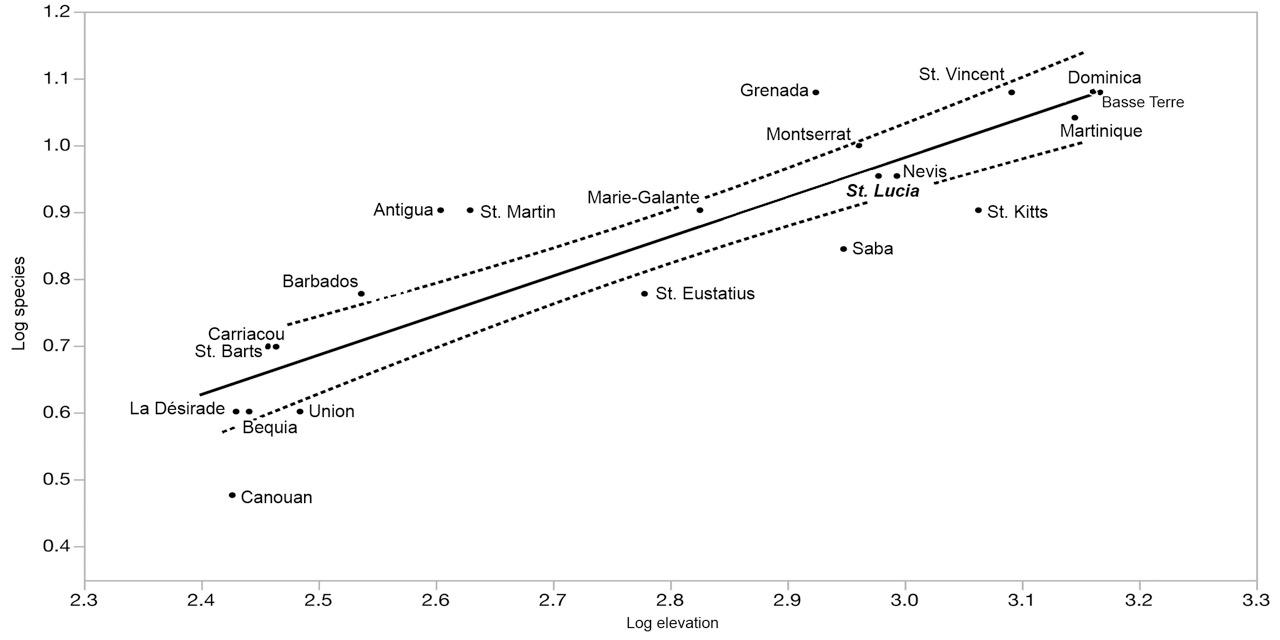
Island elevation, island area, and bat species richness.—We used a multiple regression analysis to show that island elevation best predicts the number of bat species on 21 islands in the Lesser Antilles. Island elevation is an effective proxy for habitat diversity, plant biodiversity, and hence species richness in the bat fauna.
Species (9): Noctilio leporinus, Monophyllus plethodon, Artibeus jamaicensis x schwarti hybrid, Ardops nichollsi, Brachyphylla cavernarum, Sturnira paulsoni, Tadarida brasiliensis, Molossus molossus, Pteronotus davyii
Publication: Bats of St. Lucia (2018) [Big file]
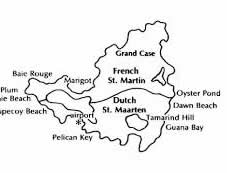
SXM-ST. MAARTEN MARTIN
Comment: We added 3 species of bat to this island fauna - Monophyllus plethodon, Ardops nichollsi, and Natalus stramineus. Re-examination of the single voucher of Myotis nigricans nesopolus led us to exclude this species from the inventory. We express some concerns about the future conservation status on the island.
Species (8):
Artibeus jamaicensis, Brachyphylla cavernarum, Molossus molossus,
Tadarida brasiliensis, Noctilio leporinus, Monophyllus plethodon,
Ardops nichollsi, and Natalus stramineus (redaction of Myotis nigricans nesopolus).Publication: Bats of St Martin/Maarten (2007)
See also website by Eric Dubois-Millot HERE
SVD-ST. Vincent
Comment: Recent advancements in population genomics have led to the discovery of the reticulated evolutionary history of Artibeus schwartzi and it is likely that the formation of the hybrid evolutionary trajectory of this species is linked with classical island biogeography. The bat fauna of St. Vincent is unique in the West Indies, characterized by being a crossroads for species, an outpost for both northern and southern species, the boundary for a multi-island bat fauna as marked by Koopman’s Line (left), and a site of endemism. Based on our studies, we place the bat fauna of St. Vincent as the southern-most island in the Lesser Antillean Faunal Core.
Species (12): Noctilio leporinus, Monophyllus plethodon, Glossophaga longirostris, Artibeus schwarti, Artibeus lituratus, Ardops nichollsi, Brachyphylla cavernarum, Sturnira paulsoni, Tadarida brasiliensis, Molossus molossus, Pteronotus fuscus, Micronycteris buriri
Publications:
1) New species of Micronycteris on SVD (2011)
2) Bats of St. Vincent (2018) [Big file]
COLLEAGUES: Rick Adams, Andy Caballero, James 'Scriber' Daly, Calvin 'Blacka' Fenton,
Hugh Genoways, Karen Hadley, Jim Johnson, Kenrick Joseph, Jennifer Krauel, Gary Kwiecinski,
Kevel Lindsay, John 'Gambie' Martin, Will Masefield, Matt Morton, Phillemon 'Pie' Murrain,
Hans VanBuel, and Phil Atkinson (not pictured).STUDENTS: Special thanks go to our long-laboring students who have done an excellent
job in the field: (alphbetical) Jon Appino, Brandon Bales, Karen Boegler, Matt Clarke,
Sam Daane, Chris Cudmore, Sam Daane, Anya Hartpence, Justin Hoffman, Paul Homnick,
Jeff Huebschman, Jessica Kiser, Joe Kolba, John Larsen, Peter Larsen, Roxy Larsen,
Betsy South, John Ratcliffe, Vicki Swier, Anya Hartpence, Paul Homnick, Peter Larsen,
Roxy Larsen, Betsy South, Jeff Huebschmann, John Ratcliffe, and Vicki Swier.


We offer thanks to the above for interest in our research and periodic funding
Our field efforts in the Lesser Antilles...
Core personnel (in order of induction):
Scott C Pedersen, SCP
Gary G Kwiecinski, GGK
Hugh H Genoways, HHG
Peter A Larsen, PAL
Roxanne J Larsen, RJL1994-MNI: SCP (Hadley, Lahti-Parsell)
1994-ANU: Morton (Day)
1995-MNI: Morton (Day)
1997-MNI: SCP
1998-ANU: SCP, Adams (Cooper)
1998-MNI: SCP, Adams (Atkinson, 'Daane, Daly, Grey, Murrain)
1999-NEV: Morton (Courts)
1999-SKB: Morton (Courts)
2000-ANU: SCP (Swier*, Appino')
2000-MNI: SCP (Swier*, Appino', Ratcliffe*, Murrain)
2001-SKB: SCP, HHG, GGK
2001-NEV: SCP
2001-MNI: SCP, GGK (Hadley)
2002-EUX: SCP, (Huebschman*, Hartpence', P. Larsen', South')
2002-MNI: SCP, GGK, (Hartpence', P. Larsen', South')
2002-SAB: SCP (Huebschman*, Hartpence', P. Larsen', South')
2002-SXM: SCP, GGK (Huebschman*, Hartpence', P. Larsen', South')
2003-ANU: SCP, HHG, PAL*
2003-BBQ: SCP, HHG, PAL*
2003-EUX: SCP, HHG, PAL*
2003-MNI: GGK
2003-SAB: SCP, HHG, PAL*
2003-SXM: SCP, HHG, PAL*
2004-EUX: SCP, HHG, Kwiecinski, PAL*
2004-MNI: SCP, HHG, Kwiecinski, PAL*
2004-SBA: SCP, HHG, PAL*
2004-SXM: SCP, HHG, PAL*
2005-MNI: SCP, GGK, Adams, RJL* (Boegler')
2005-SVD: GGK, SCP, HHG, PAL* (Bales*)
2006-MNI: SCP, RJL* (Cudmore', Kolba')
2006-SVD: GGK, SCP, HHG, PAL*, RJL* (Hoffman*, J. Larsen', Cudmore', Homnick', Kolba')
2007-BGI: HHG, SCP, GGK, RJL* (Clarke')
2007-MNI: SCP (Clarke')
2007-SLU: GGK, SCP, HHG, RJL* (Clarke')
2008-BGI: HHG, SCP, GGK, RJL*, (Bales*, Roedel, Cindric, Corneil*)
2008-MNI: SCP (Roedel, Krauel*, Corneil*)
2008-SLU: HHG, SCP, GGK, RJL* (Bales*, Roedel, Krauel*, Corneil*)
2009-EUX: SCP, HHG, GGK
2009-MNI: SCP, HHG
2009-SLU: SCP, HHG, GGK (Krauel*)
2011-MNI: SCP, Krauel*, Datta*
2019-MNI: TBA*indicates graduate students, 'indicates undergraduate students, parens indicate non-team members